Rectangle 2 Clay Cutter: Donut Geometri STL Files
Elevating your polymer clay jewelry or baking projects often comes down to the precision of your tools. The Rectangle 2 Clay Cutter - Donut Geometri digital collection offers a sophisticated solution for creators who value clean lines and versatile sizing. Unlike standard round cutters, this geometric donut profile introduces a modern architectural element to earrings, pendants, barrettes, and even fondant decorations. As a digital download, this STL file bundle allows you to manufacture professional-grade tools in-house, giving you complete control over your production workflow and design consistency.
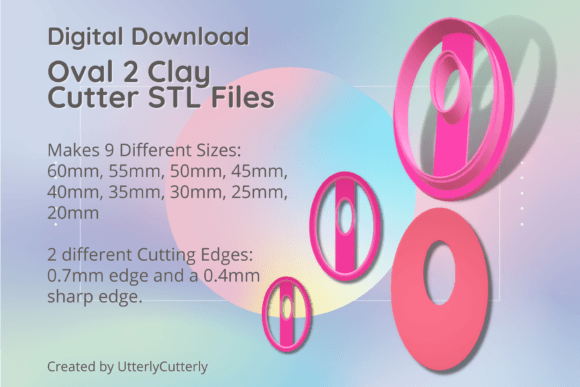
This specific cutter set bridges the gap between minimalist aesthetics and functional craftsmanship. The "donut" geometry refers to the hollow rectangular center, creating a bold frame shape that serves as an excellent canvas for surface treatments, mica powders, or glazes. Whether you are a small business owner streamlining your product line or a hobbyist exploring modern typography-inspired shapes, having immediate access to these files means you can iterate on designs without waiting for shipping. The ability to print these tools on demand transforms how you approach both creative experimentation and commercial fulfillment.
Technical Specifications and Print Optimization
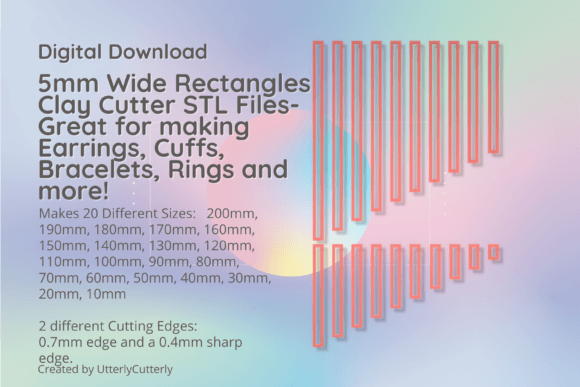
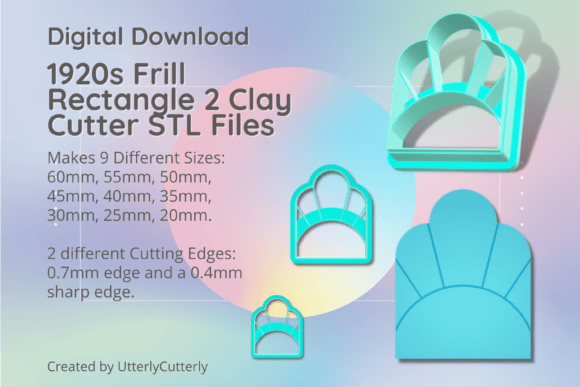
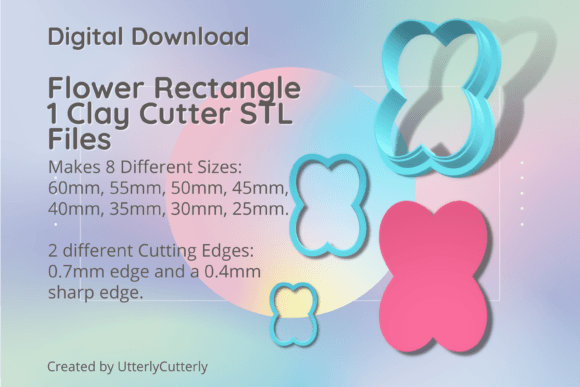
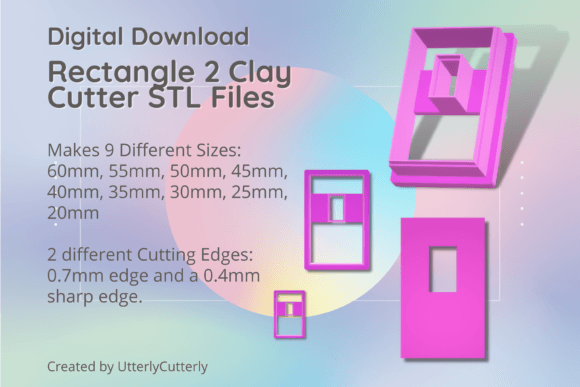
Understanding the technical parameters of your STL files is crucial for achieving crisp edges and durable tools. This pack includes nine distinct sizes ranging from 20mm to 60mm, measured from the longest ends. This graduated sizing system allows for curated nesting sets or standalone statement pieces. When preparing your slicer software, it is important to distinguish between the two included cutting edge profiles, as each serves a different purpose in your making process.
- Standard Edge: Features a 0.7mm wall thickness with a 3mm thick base and 12mm height. This robust profile is ideal for general-purpose cutting and provides structural rigidity during printing and use.
- Sharp Edge (SE): Abbreviated as SE in the file names, this variant includes a 1mm support wall tapering to a precise 0.4mm cutting edge. It maintains the same 3mm base and 12mm height but delivers cleaner slices through softer materials like fondant or conditioned clay.
For makers incorporating texture into their work, note that any embossing lines within the design are 10.5mm tall. To ensure these details transfer correctly without bottoming out, you should work with clay sheets thicker than 1.5mm. This specification highlights the importance of matching your material preparation to your tool geometry. Because these are digital assets, you can reprint worn-out Sharp Edge versions regularly to maintain factory-level precision in your handmade goods, ensuring every earring or cookie looks identical to the last.
Versatile Applications Across Mediums
While primarily designed for polymer clay, the Rectangle 2 Clay Cutter - Donut Geometri excels across multiple creative disciplines. The geometric frame shape is inherently balanced, making it a staple for contemporary jewelry design. In earrings, the negative space reduces weight while maintaining visual impact, a critical consideration for wearable art. For barrettes and hair accessories, the structured rectangle offers a secure surface for attaching hardware and provides ample room for intricate surface design techniques like mokume gane or silk screening.
In the culinary realm, this cutter transitions seamlessly to cookies and fondant. The Sharp Edge (SE) files are particularly valuable here, as they slice through dough without dragging or distorting the shape. A clean cut is essential for royal icing flooding or detailed painting, where ragged edges can ruin the final presentation. Marketing professionals and content creators also find value in these consistent shapes; using uniform geometric frames in food photography or product styling creates a cohesive visual identity across social media platforms and packaging design. The ability to produce custom-sized props on demand adds a layer of professionalism to brand imagery that generic store-bought cutters simply cannot match.
Curating Your Digital Tool Library
Treating your STL files as modular design assets rather than single-use items changes how you plan collections. With new files added to the store weekly, you can build a comprehensive library of complementary geometries. The Rectangle 2 set pairs exceptionally well with circular or organic donut variants, allowing you to create mixed-media collections that feel intentional and curated. When evaluating which size to print first, consider your end goal: the 60mm and 55mm sizes work beautifully as pendant bases or large cookie stamps, while the 20mm to 30mm range is perfect for delicate stud earrings or cake topper accents.
From a business perspective, owning the digital master files protects your supply chain. You are no longer dependent on external manufacturers for tool availability or quality control. If a specific size becomes a bestseller, you can scale production instantly by printing additional cutters or optimizing your print farm layout. This autonomy is vital for entrepreneurs responding to trends or seasonal demands. Furthermore, because the files are optimized for easy printing, you spend less time troubleshooting failed prints and more time creating. Always verify your printer’s calibration when switching between the Standard and Sharp Edge profiles, as the finer 0.4mm tip requires accurate flow rate settings to prevent clogging or under-extrusion.
Maximizing Value from Digital Downloads
Since this is not a physical item, your success depends entirely on proper file management and printer setup. After payment, you gain immediate access to the download, eliminating lead times. We recommend organizing your STL library by size and edge type to streamline your workflow. Labeling printed cutters physically with their dimensions and edge type (e.g., "45mm SE") prevents confusion during busy production sessions. This organizational habit mirrors professional asset management in graphic design, where clear naming conventions save hours of searching.
When testing new sizes or edge types, always run a calibration print first. The 12mm height is generous enough to accommodate various clay thicknesses, but verifying your actual printed dimensions against the digital specs ensures accuracy. For those using resin printers, the Sharp Edge files may require specific support adjustments to preserve the delicate 0.4mm tip. FDM users should consider using a hardened steel nozzle if printing abrasive clay-filled filaments, though standard PLA works perfectly for cutting raw polymer clay and dough. By mastering these digital fabrication nuances, you transform a simple STL file into a cornerstone of your creative practice, enabling consistent, high-quality output that resonates with customers and audiences alike.