Diamond 1 Clay Cutter - Basic Shape Geom: A Digital STL Guide for Makers
For polymer clay artists, cookie decorators, and jewelry makers, achieving geometric precision is often the difference between a homemade look and a professional finish. The Diamond 1 Clay Cutter - Basic Shape Geom digital download provides an immediate solution to this common creative hurdle. This comprehensive STL file bundle offers a versatile foundation for creating everything from delicate earrings to uniform fondant decorations. By utilizing these printable files, makers can bypass the limitations of store-bought tools and curate a custom toolkit tailored specifically to their current project requirements.
Solving Common Sizing and Precision Challenges
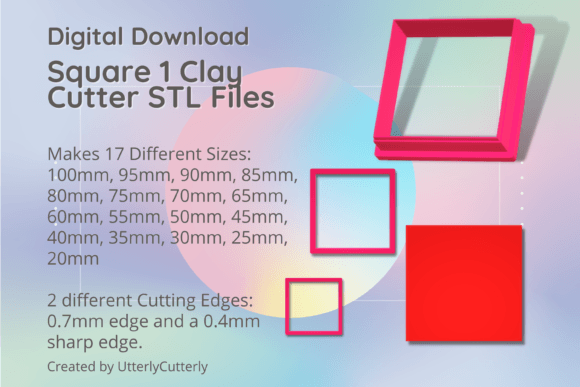
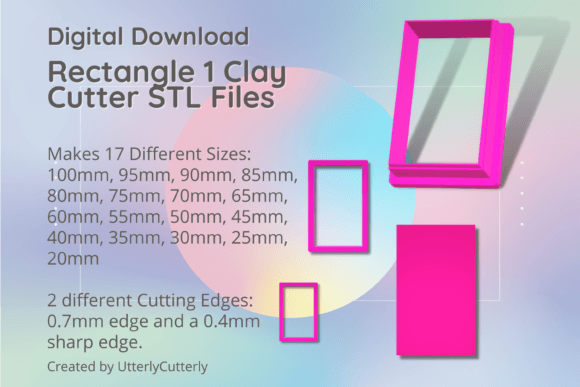
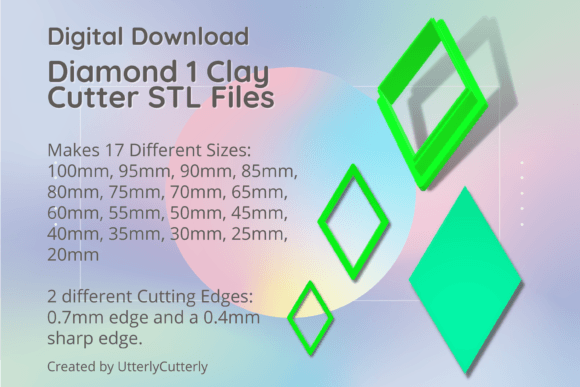
One of the most frequent frustrations in clay work and baking is finding a cutter that matches the exact scale of a design. Physical cutters are typically sold in fixed sets with significant size gaps, forcing artists to compromise on their vision or spend excessive time hand-trimming shapes. The Diamond 1 Clay Cutter - Basic Shape Geom addresses this issue through granular sizing options. With 17 distinct sizes ranging from 20mm to 100mm in 5mm increments, you gain total control over proportion.
This level of specificity is particularly valuable when creating graduated designs, such as nesting pendants or tiered cookie displays. Instead of searching multiple vendors for compatible shapes, you have instant access to a complete spectrum of dimensions. Furthermore, because this is a digital product, there is no shipping delay. When inspiration strikes or a client requests a specific size adjustment, you can print the exact tool needed within minutes, keeping your creative momentum uninterrupted.
Choosing the Right Cutting Edge for Your Material
Not all materials respond to cutting edges in the same way. Polymer clay requires a different approach than sugar paste or cookie dough. Recognizing this, the Diamond 1 Clay Cutter - Basic Shape Geom pack includes two distinct cutter profiles optimized for different applications. Understanding the difference between these two types is essential for getting the best results from your 3D printer.
The Standard 0.7mm Wall Profile
The first option features a 0.7mm wall thickness with a 3mm thick base and a 12mm height. This robust profile is ideal for general-purpose use. The thicker wall provides structural rigidity, making it easier to press into firmer clays without flexing. It produces a clean edge suitable for most jewelry components and barrettes where durability during the cutting process is paramount. This version is generally recommended for beginners to 3D printing or for those working with denser mediums that require more force to penetrate.
The Sharp Edge (SE) Profile
For projects demanding razor-sharp definition, the Sharp Edge variant—abbreviated as SE in the file names—is the superior choice. This design utilizes a 1mm support wall tapering down to a precise 0.4mm cutting edge. Like the standard version, it maintains a 3mm thick base and 12mm height for handling comfort. The SE profile excels at slicing through soft polymer clay and fondant with minimal resistance, reducing drag and distortion. This results in crisp, professional edges that require little to no post-processing smoothing. Experienced makers often prefer the SE files for intricate jewelry work where edge clarity defines the quality of the final piece.
Practical Applications Across Mediums
The versatility of the Diamond 1 Clay Cutter - Basic Shape Geom extends far beyond a single craft. The diamond geometry is a fundamental shape that serves as a building block across various disciplines.
- Polymer Clay Jewelry: Create lightweight statement earrings by using the larger 80mm–100mm sizes, or opt for the 20mm–30mm range for delicate studs and charm links. The consistent geometry allows for perfect pairing in earring sets.
- Cookies and Baking: Achieve bakery-standard uniformity for diamond-shaped cookies. The food-safe nature of printed PLA (when used correctly) makes these ideal for dough. The graduated sizes allow bakers to create visually appealing assorted boxes or tiered wedding favors.
- Fondant and Gum Paste: Cake decorators can utilize the Sharp Edge versions to cut precise geometric accents for modern cake designs. The ability to print multiple sizes means you can create depth and layering effects that are difficult to achieve with standard fondant tools.
- Hair Accessories: Barrettes and hair clips benefit from the mid-range sizes (40mm–60mm). The sturdy standard wall profile works well here, as hair accessory bases often require slightly thicker clay for structural integrity.
Technical Considerations for Successful Printing
To maximize the utility of your Diamond 1 Clay Cutter - Basic Shape Geom files, proper print settings are crucial. Since these are functional tools rather than decorative models, print orientation and material choice matter significantly. Always print cutters with the cutting edge facing up to avoid the need for supports, which can ruin the blade's precision. A brim is often helpful to ensure the thin walls adhere properly to the build plate.
Users should also note the embossing line specifications. If your chosen design includes embossing details, they are designed at 10.5mm tall. This means you must condition your clay to be thicker than 1.5mm to accommodate the impression without bottoming out. Failing to account for this depth can result in uneven cuts or distorted impressions. Testing your print with a small calibration cube or a single test cutter before printing the entire set is always a recommended best practice to dial in your flow rate and layer adhesion.
Building a Custom Toolkit Through Digital Expansion
Investing in digital STL files like the Diamond 1 Clay Cutter - Basic Shape Geom is not just about acquiring a single shape; it is about adopting a scalable workflow. Because new STL files are added to the store weekly, you can continuously expand your collection to match evolving trends and seasonal demands. This modular approach allows you to curate unique cutter combos that set your work apart from competitors using mass-produced tools.
For example, you might pair this basic diamond geom pack with textured variants or complementary geometric shapes released later. Over time, you build a proprietary library of tools that reflects your unique artistic signature. This digital-first approach reduces physical storage clutter and eliminates the risk of discontinued products. You own the manufacturing capability, ensuring that your creative resources are always available, reproducible, and adaptable to whatever project comes next.
Important Usage and Safety Notes
Please remember that this product is a digital download, not a physical item. Upon purchase, you receive immediate access to the STL files required to fabricate the cutters yourself. While 3D printed cutters are incredibly useful, users should exercise appropriate safety and hygiene. For food applications, many makers coat their prints in food-safe epoxy resin to seal layer lines where bacteria could accumulate. For clay work, dedicated cutters prevent cross-contamination between crafting and culinary uses. By understanding both the technical specifications and practical applications of the Diamond 1 Clay Cutter - Basic Shape Geom, you can transform a simple digital file into an indispensable asset for your creative business or hobby.